
 HEADLINE NEWS
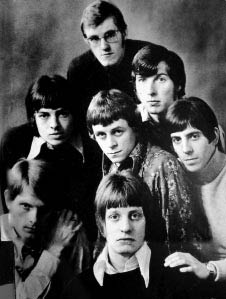
The Alan Bown Set – a musically daring mix of horns and rock – was conceived in the Summer of 1965 by four former John Barry Seven members: Alan Bown (trumpet); Dave Green (saxophone / flute); Jeff Bannister (organ / vocals); Stan Haldane (bass) together with Vic Sweeney (drums) and Pete Burgess (guitar).
Bown’s musical career began after his stint in National Service during which he served with the Royal Air Force. He formed his first group in the early ‘60’s and performed as far afield as the Star Club in Hamburg, crossing paths with The Beatles and others who were treading the same, burgeoning, musical path.
Jess remembers…
“The ‘Shakes’ were on the verge of splitting up when, on a Friday night, sometime in February, we played a gig at Digbeth Civic Hall in Birmingham supporting a band from London called the Alan Bown Set. I thought that the AB boys were good.
‘What we were doing in The Shakedown Sound was…we started out as a kind of straight ahead blues band, but then morphed into a mod-Blues band where you started to do some Otis Redding bits ‘n pieces in the set as opposed to all the Screamin’ Jay Hawkins and T-Bone Walker kinda things. But… there wasn’t any real prospect in The Shakes of making a real record or anything like that.
‘So… it was really a logical choice to make… and, pretty much from the word go, it was full-on.”
The first single Jess recorded with The Alan Bown Set was ‘Everything’s Gonna Be Alright’ c/w ‘Baby Don’t Push Me.’… which was fairly quickly followed by their take on the Edwin Starr original of ‘Headline News’ c/w ‘Mister Pleasure.’
‘I could have only been doing three or four songs with them at that time and Jeff would have still been doing ‘I’m The One Who Loves You’, y’know all The Impressions stuff that they also did.
‘Tony Reeves who ended up being the bass player in Colosseum and worked with John Mayall and other people. He was one of the house producers for Pye working under Tony Hatch. And, that was my first time in a proper studio and working with a proper producer
‘So, we did those – they were just three hour sessions. And then, of course, we set in to the gigging scenario.
‘We rehearsed quite a bit. We used to rehearse at a place in Hanwell. When we were doing new tunes, we would go there perhaps twice a month. We were just getting busier and busier – the whole live thing was growing and growing and growing.
‘We were working right across the country – in the North like at the Mojo, we were there every month and a half or so; Redcar at the Coatham Bowl up there, the Country Club that was owned by John McCoy and his brothers in Middlesborough; Newcastle too.
‘The smaller clubs were sort of stop-off places to the likes of the Coatham Bowl which was a big ballroom in a hotel that probably held about eight hundred people…
‘And, this was the circuit that everyone was on… well, anyone who was anyone at the time… The Who, Small Faces, everyone you can think of… all playing the same venues. I don’t really remember days off as such, we were constantly working.
‘Financially, it was better than the Shakedown Sound because we didn’t hardly earn anything then but, it still wasn’t a great deal, though it was alright – I bought my first car off my sister and stuff like that which I couldn’t have afforded to do prior to then.”
In July and with their stock rising, the group appeared on the seminal TV show, Ready Steady Go. Later the same month, they played the inaugural Windsor Jazz & Blues Festival and, in September one of their electrifying live shows at London’s Marquee Club was caught on tape and released as one half of a live album – the other side being devoted to another club-land legend in the making, Jimmy James and The Vagabonds. Before the year was out, however, yet another personnel change occurred as Tony Catchpole replaced Pete Burgess on guitar.
The band were also becoming television veterans having appeared on Alan Freeman’s show – All Systems Freeman; the Simon Dee Show and Eamonn Andrew’s “Today”. They also played London’s Royal Albert Hall – a show which included both Joe Cocker as well as the Bonzo Dog Doo-Dah Band.
However, it was in August that the cruelest of luck beset The Alan Bown following an appearance on the BBC’s flagship music programme, Top Of The Pops. With their single, We Can Help You – a cover of the Patrick Campbell-Lyons and Alex Spyropoulos of Nirvana original that appeared on that group’s Story Of Simon Simopath debut LP for Island Records – riding high at #26, the TOTP airing on August 8th virtually guaranteed a Top Ten placing for the single when the following week’s British charts were published.
However, the record company’s pressing plant went on strike and production halted.
The band’s manager took out a court injunction but, by the time the dispute had been resolved, We Can Help You had lost all sales momentum and disappeared off the face of the charts. Ironically, shortly after this debacle, the group appeared on the (appropriately named) Innocence, Anarchy & Soul television spectacular host by Jack Good.
Two further singles (Toyland c/w Technicolour Dream in October and Story Book c/w Little Lesley) kept up the momentum; releases that backed up a hectic gigging schedule.
The band’s growing popularity saw packed-to-the-rafters residencies at London’s Marquee Club as well as opened them up to the dangers inherent with over-enthusiastic crowds in smaller venues; band-member-blood was spilled after a big fight broke out one night at The Wellington Club in East Dereham, Norfolk. This was where – in the words of one eye-witness – “the local “Rockers” took exception to The ‘Alan Bown! mod panache.’
Jess and The Alan Bown! were forced to leave the stage early, (and the situation) got completely out of hand when the door to their dressing room in the basement was smashed down while members of the band were desperately striving to protect themselves.
‘It was a total disgrace and those of us who lived for the Alan Bown!, who until then played in Dereham regularly. were shocked and ashamed.”
Then we parted company with Pye. But things were changing even then; all this new wave of music was coming in from America.
‘And also… the British groups like The Beatles were starting to do things that were kind of better than bands like ours; we were still mimicking the Americans yet things coming across from the States were moving in a different direction – pop music was growing up.
‘And, I suppose, it was all about to take off with the so-called Summer Of Love, hippyness and mind expanding drugs and all those sort of things.”
The label switch was to Deram.
“We weren’t on Decca, that was for the likes of Frank Ifield and Frankie Vaughan – obviously the label heads weren’t getting shot of all those kind of artists as it was still big business, the central league entertainers.
‘So us and The Moody Blues were put on Deram and we recorded the first album proper.
‘I suppose that’s where we also started writing the little ‘story-like songs’.
‘But, of course, I hand a hand in them as well… but, y’know, I’d bring forth these other things which were from the American bands like The Young Rascals and, of course, All Along The Watchtower – ‘cos I’d just heard John Wesley Harding.
‘The majority of the tracks were one take; it was pretty much live. With one tune, we’d done it.. a really good take… and, then Stan makes a mistake… right near the end and, I’ve gone la-de-dah-de-dah as if its all over and we’ve gotta do another take but, in fact, what they said was, ‘nah we’ll just fade it off.’
‘It was almost like… ohhhh nooooooo… its broken down in the last second, we’ll have to do another take because that’s how live it was.
‘Yeah, we used to kind-of overdub vocals but that was pretty much only to double-track.
‘It wasn’t really to replace because the art of punching in and punching out hadn’t really developed that much by then.
‘We could edit and things like that – but… you know, if you didn’t get it right, basically, you had to set the tape back to zero and do it again.”
The album was produced by Mike Hurst – a former member of The Springfields. When that group fell apart in 1963, he formed a group of his own with Albert Lee, Jimmy Page and Tony Ashton but, despite the stellar talent involved, they too found little success.
Two years later he began work with Mickie Most and Andrew Loog Oldham and within a few months had produced Cat Stevens’ first hit, I Love My Dog. He quickly followed this with hits for Marc Bolan, The Move, PP Arnold and Spencer Davis Group – becoming one of the go-to producers of the era.
‘At the very early gigs there was no sound-check or any of that malarkey. But, between Outward Bown and the next album we did get to have roadies.
‘Bob (Pridden – originally Alan Bown’s driver-cum-roadie) had gone on to The Who by then but we had two guys, sometimes three – one used to drive the van because we, by this time, were travelling in a car – a great big American seven-seater Galaxy with three rows of seats.
‘We had a WEM PA by then too, monitors were still really not that well developed but the entire set-up was a lot more sophisticated than it was when I first started with them.”
The group continued their journeying to the four corners of the British Isles – playing the likes of Marc Altman’s Ballroom in Leeds, with Spooky Tooth and Elmer Gantry’s Velvet Opera and at the Assembly Rooms in York, where Peter Stringfellow used to run the between-act disco.
The band were also in the studio – two singles were released during 1969, Still As Stone c/w Wrong Idea and Gypsy Girl c/w All I Can – and tracks were laid down for their second album.
However, on completion of the album sessions, Jess announced he was leaving.
Despite the boddy-blow to the band, the band’s management managed to concoct a bit of PR spin – and simply announced that Jess was taking a break as advised by his doctors.
Doubtless a public relations exercise in satisfying honour on both sides since that self-same announcement trumpeted the arrival of the former Mandrake Paddlesteamer vocalist Robert Palmer together with news that The Alan Bown! would be touring America the following October.
‘This name’ recalls Jeff Bannister, ‘was an amusing misnomer. Even Robert couldn’t explain where the Paddlesteamer tag came from. His band was called The Mandrakes.’
is stage we had a manager, and while outfits were important, they weren’t to me…
‘What they said was, “This is not a four piece band, this is a seven-piece band… and, if everybody looks like they’ve come from a different area of the country – city, town or whatever – you’ll just look like a shambles.” And that’s absolutely true.
‘We had these suits and the reason we wore them makes major sense to me – now. Alan’s was a red one, mine was a pin-striped brown, John’s was yellow and Vic’s was green – they were very nice tonic mohair. But, frankly, I couldn’t keep a jacket on longer than one song because I’d soak it up.
‘So, I didn’t kinda like that – I wanted to go on in my own clothes, I had some nice Granny Takes A Trip clobber, they were hip…!
‘So, there was lots of things I was rebelling against, plus, by this time Steve had left Spencer Davis and decamped to Berkshire and there was an awful lot of stuff going on down there with the Birmingham people – we’d be down there every day off, as would Trevor Burton and Ace Kefford from The Move and there’d be lots of jamming – good times.
‘So, Alan B sat me down in front of the manager and, to be fair, there had been a problem as I’d had a bad throat – there was some kind of danger that I might have damaged or had some nodes on my vocal cords… actually turned out that there weren’t…
‘But, I was loosing my voice, maybe down to generally over-doing it so, they sort of said… “Look… please… you’ve got to do this, do that…” And they were probably right… but, I wasn’t having it.
‘I was like… hmmm, this is freedom time… lets love everyone and I really wasn’t ready to be disciplined in any way at all… this wasn’t the army… So, I’m sure they didn’t want me to go but they did try to correct me.
‘I suppose within three or four months of that I decided to go.
‘It wasn’t a move in a new direction away from soul and funky kind of music; it was more of a new direction away from doing Tamla covers.
‘It was still Blues and Soul for me – I couldn’t get away from the Soul singers – Otis Redding was pretty much my favourite singer; his delivery, just fantastic…
‘And Marvin Gaye too… you’d think… jeez, what great singers but I really liked the tenderness and naievety of people who, in those days, you’d consider couldn’t really sing.
‘People like Neil Young – he wouldn’t have been considered a top of the tree vocalist but there was just something in his voice that was… particularly on the melancholy songs that was so… yearning, so right, that I started to view that as – another kind of soul.
‘Y’see there was also this new wave of American music that was turning my head too. Bob Pridden was away with The Who and always coming home with a suitcase full of albums. He’d buy pretty much everything that was coming out – and that was the first time I’d seen gate-fold sleeves and stuff like that.
‘And, in a way, that’s where Music From Big Pink enters the picture.
‘And, of course, then The Spooky’s went on to do The Weight and there’s no doubt that record shaped some of the things that Traffic were doing as well.
‘In general our heads were open to so much experimentation and this juxtaposition of different musics.
‘So, what I was really really getting involved in then was, besides the Blues and Soul, I loved The Byrds, Moby Grape, Love, Buffalo Springfield; it was those kind of groups that were really doing it for me, filling my head then… and so, in that respect, I was moving in to that arena.
‘I just went back to Kidderminster – frankly, I didn’t know what else to do.
I knew I wanted to do something different but, the only other musicians I knew were people who were all in fairly steady groups and, I really didn’t want to get involved in one of those kind of here’s Johnnny from this band and Ted from that group and Bill from some other band… and Jess Roden on vocals – that wasn’t right for me at all.
‘But, quite honestly, I had very little skill as a songwriter.”

The Alan Bown!
Despite the boddy-blow to the band, the band’s management managed to concoct a bit of PR spin – and simply announced that Jess was taking a break as advised by his doctors.
Doubtless a public relations exercise in satisfying honour on both sides since that self-same announcement trumpeted the arrival of the former Mandrake Paddlesteamer vocalist Robert Palmer together with news that The Alan Bown! would be touring America the following October.
‘This name’ recalls Jeff Bannister, ‘was an amusing misnomer. Even Robert couldn’t explain where the Paddlesteamer tag came from. His band was called The Mandrakes.’
we had a manager, and while outfits were important, they weren’t to me…
‘What they said was, “This is not a four piece band, this is a seven-piece band… and, if everybody looks like they’ve come from a different area of the country – city, town or whatever – you’ll just look like a shambles.” And that’s absolutely true.
‘We had these suits and the reason we wore them makes major sense to me – now. Alan’s was a red one, mine was a pin-striped brown, John’s was yellow and Vic’s was green – they were very nice tonic mohair. But, frankly, I couldn’t keep a jacket on longer than one song because I’d soak it up.
‘So, I didn’t kinda like that – I wanted to go on in my own clothes, I had some nice Granny Takes A Trip clobber, they were hip…!
‘So, there was lots of things I was rebelling against, plus, by this time Steve had left Spencer Davis and decamped to Berkshire and there was an awful lot of stuff going on down there with the Birmingham people – we’d be down there every day off, as would Trevor Burton and Ace Kefford from The Move and there’d be lots of jamming – good times.
‘So, Alan B sat me down in front of the manager and, to be fair, there had been a problem as I’d had a bad throat – there was some kind of danger that I might have damaged or had some nodes on my vocal cords… actually turned out that there weren’t…
‘But, I was loosing my voice, maybe down to generally over-doing it so, they sort of said… “Look… please… you’ve got to do this, do that…” And they were probably right… but, I wasn’t having it.
‘I was like… hmmm, this is freedom time… lets love everyone and I really wasn’t ready to be disciplined in any way at all… this wasn’t the army… So, I’m sure they didn’t want me to go but they did try to correct me.
‘I suppose within three or four months of that I decided to go.
‘It wasn’t a move in a new direction away from soul and funky kind of music; it was more of a new direction away from doing Tamla covers.
‘It was still Blues and Soul for me – I couldn’t get away from the Soul singers – Otis Redding was pretty much my favourite singer; his delivery, just fantastic…
‘And Marvin Gaye too… you’d think… jeez, what great singers but I really liked the tenderness and naievety of people who, in those days, you’d consider couldn’t really sing.
‘People like Neil Young – he wouldn’t have been considered a top of the tree vocalist but there was just something in his voice that was… particularly on the melancholy songs that was so… yearning, so right, that I started to view that as – another kind of soul.
‘Y’see there was also this new wave of American music that was turning my head too. Bob Pridden was away with The Who and always coming home with a suitcase full of albums. He’d buy pretty much everything that was coming out – and that was the first time I’d seen gate-fold sleeves and stuff like that.
‘And, in a way, that’s where Music From Big Pink enters the picture.
‘And, of course, then The Spooky’s went on to do The Weight and there’s no doubt that record shaped some of the things that Traffic were doing as well.
‘In general our heads were open to so much experimentation and this juxtaposition of different musics.
‘So, what I was really really getting involved in then was, besides the Blues and Soul, I loved The Byrds, Moby Grape, Love, Buffalo Springfield; it was those kind of groups that were really doing it for me, filling my head then… and so, in that respect, I was moving in to that arena.
‘I just went back to Kidderminster – frankly, I didn’t know what else to do.
I knew I wanted to do something different but, the only other musicians I knew were people who were all in fairly steady groups and, I really didn’t want to get involved in one of those kind of here’s Johnnny from this band and Ted from that group and Bill from some other band… and Jess Roden on vocals – that wasn’t right for me at all.
‘But, quite honestly, I had very little skill as a songwriter.”
The Alan Bown!
Despite the boddy-blow to the band, the band’s management managed to concoct a bit of PR spin – and simply announced that Jess was taking a break as advised by his doctors.
Doubtless a public relations exercise in satisfying honour on both sides since that self-same announcement trumpeted the arrival of the former Mandrake Paddlesteamer vocalist Robert Palmer together with news that The Alan Bown! would be touring America the following October.
‘This name’ recalls Jeff Bannister, ‘was an amusing misnomer. Even Robert couldn’t explain where the Paddlesteamer tag came from. His band was called The Mandrakes.’
‘What they said was, “This is not a four piece band, this is a seven-piece band… and, if everybody looks like they’ve come from a different area of the country – city, town or whatever – you’ll just look like a shambles.” And that’s absolutely true.
‘We had these suits and the reason we wore them makes major sense to me – now. Alan’s was a red one, mine was a pin-striped brown, John’s was yellow and Vic’s was green – they were very nice tonic mohair. But, frankly, I couldn’t keep a jacket on longer than one song because I’d soak it up.
‘So, I didn’t kinda like that – I wanted to go on in my own clothes, I had some nice Granny Takes A Trip clobber, they were hip…!
‘So, there was lots of things I was rebelling against, plus, by this time Steve had left Spencer Davis and decamped to Berkshire and there was an awful lot of stuff going on down there with the Birmingham people – we’d be down there every day off, as would Trevor Burton and Ace Kefford from The Move and there’d be lots of jamming – good times.
‘So, Alan B sat me down in front of the manager and, to be fair, there had been a problem as I’d had a bad throat – there was some kind of danger that I might have damaged or had some nodes on my vocal cords… actually turned out that there weren’t…
‘But, I was loosing my voice, maybe down to generally over-doing it so, they sort of said… “Look… please… you’ve got to do this, do that…” And they were probably right… but, I wasn’t having it.
‘I was like… hmmm, this is freedom time… lets love everyone and I really wasn’t ready to be disciplined in any way at all… this wasn’t the army… So, I’m sure they didn’t want me to go but they did try to correct me.
‘I suppose within three or four months of that I decided to go.
‘It wasn’t a move in a new direction away from soul and funky kind of music; it was more of a new direction away from doing Tamla covers.
‘It was still Blues and Soul for me – I couldn’t get away from the Soul singers – Otis Redding was pretty much my favourite singer; his delivery, just fantastic…
‘And Marvin Gaye too… you’d think… jeez, what great singers but I really liked the tenderness and naievety of people who, in those days, you’d consider couldn’t really sing.
‘People like Neil Young – he wouldn’t have been considered a top of the tree vocalist but there was just something in his voice that was… particularly on the melancholy songs that was so… yearning, so right, that I started to view that as – another kind of soul.
‘Y’see there was also this new wave of American music that was turning my head too. Bob Pridden was away with The Who and always coming home with a suitcase full of albums. He’d buy pretty much everything that was coming out – and that was the first time I’d seen gate-fold sleeves and stuff like that.
‘And, in a way, that’s where Music From Big Pink enters the picture.
‘And, of course, then The Spooky’s went on to do The Weight and there’s no doubt that record shaped some of the things that Traffic were doing as well.
‘In general our heads were open to so much experimentation and this juxtaposition of different musics.
‘So, what I was really really getting involved in then was, besides the Blues and Soul, I loved The Byrds, Moby Grape, Love, Buffalo Springfield; it was those kind of groups that were really doing it for me, filling my head then… and so, in that respect, I was moving in to that arena.
‘I just went back to Kidderminster – frankly, I didn’t know what else to do.
I knew I wanted to do something different but, the only other musicians I knew were people who were all in fairly steady groups and, I really didn’t want to get involved in one of those kind of here’s Johnnny from this band and Ted from that group and Bill from some other band… and Jess Roden on vocals – that wasn’t right for me at all.
‘But, quite honestly, I had very little skill as a songwriter.”
As a footnote to this section, Jess’ vocals were re-recorded by the band’s newest vocal recruit – Robert Palmer and, in fact, two versions of the album were ultimately released; the British issue on Deram contains Robert’s vocals while the American release featured Jess’ vocals.
The Alan Bown! switched from Deram to Island in 1970, releasing Listen as their label debut, the record featuring Robert Palmer on vocals. However, Robert jumped ship as soon as the album had been completed and Gordon Neville re-recorded all of the vocal tracks.
A single (Pyramid) followed before yet another personnel change that saw Andy Brown come in on bass.
A second Island album entitled Stretching Out was released in 1971 before Jeff Bannister, Andy Brown and Tony Catchpole all quit, the latter two being replaced by Dougie Thompson and Derek Griffiths respectively.
The band essentially folded at the start of 1972 but briefly reformed with Dave Lawson (keyboards), Tony Dangerfield (bass & vocals), Frank White (guitar) and Alan Coulter (drums) for one final tour before ending their days in July ‘72.
Jeu De Massacre
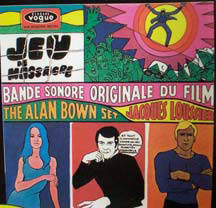
At the start of 1967, the band were commissioned by French composer and jazz pianist, Jaques Loussier to record the soundtrack to an Alain Jessua film, Jeu De Massacre (The Killing Game); a French film that tipped its hat to ‘Op Art with bandes dessinées (cartoons) by Guy Peellaert.
It starred, as husband-and-wife cartoonists, Jean-Pierre Cassel and Claudia Anger and was premiered at that year’s Cannes Film Festival, an event that coincided with The Alan Bown Set making their European television début in Monte Carlo.
“We all attended the premier of the film at the Festival and afterwards went to a major party at a very swanky ‘discotheque’.
‘The whole affair was so unreal – so far removed from the blues – and like something out of my wildest imagination.
‘We stayed at an hotel that overlooked the beach and, for some reason, every time I see the movie ‘Some Like It Hot’, the imagery reminds me of my one and only trip to Cannes.”
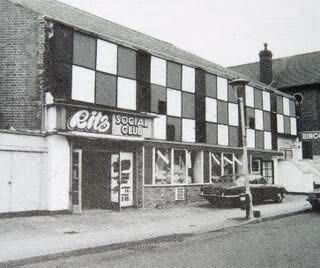
The Ritz, Kings Heath, Birmingham